


Saaed Amirjalayer
Heidelberg University, Germany
Responsive and functional materials exhibit complex, often nonlinear behaviour when subjected to external stimuli such as light, mechanical force, temperature and chemical environments. Understanding the underlying dynamic phenomena that govern their responses is crucial for engineering materials for applications such as actuation, information storage, catalysis and energy conversion.
In this presentation, I will provide a selective overview of our work on developing and applying theoretical methods in atomistic investigations of functionalized surfaces, molecular crystals and porous materials. I will discuss the impact of intermolecular interactions and confinement on individual, coupled and collective dynamics. Using representative examples, I will highlight how we can obtain a comprehensive insight into these systems by combining our atomistic simulations with advanced experimental techniques.
Christopher Barner-Kowollik
When selecting a light source for a photochemical process – including for photopolymerizations – we often consider the likelihood of a photon to be absorbed by a chromophore at a given wavelength as an accurate predictor of how well a photo-chemical process will proceed when irradiated with different colors of light. Over the last decade this paradigm has been repeatedly challenged for several photochemical reactions, as a distinct mismatch between the absorption spectrum and the wavelength resolved photochemical reactivity has been observed. Herein, we unravel potential underlying mechanisms behind the mismatched reactivity and absorbance in photocycloadditions. Initially, we probe the impact that an equilibrium established between reversible photochemical processes has on the mismatch for a pyrene-chalcone molecule. Subsequently, we establish a critical link between photophysics and photochemistry with a theory based on the selective excitation of specific microenvironments leading to molecular transitions that allow for favourable wavelength-dependent reactivity. Time-resolved and steady-state fluorescence spectroscopy measurements confirm the presence of this selectivity, with both displaying significant red-edge effects that are observed in fluorescence spectroscopy literature, further supporting our theory. By synthetically tethering chromophores together, we further evidence the importance of microenvironments and their wavelength-dependent excited-state lifetimes, presenting the missing link that explains the mismatch for many photochemical systems. The implications of the theory presented herein stretch from additive manufacturing to photo-dynamic therapy, meaning that we can potentially leverage photochemical mismatches by changing the properties of the environment surrounding the chromophore.
Carrol, J. A.; Pashley-Johnson, F.; Klein, M.; Stephan, T.; Pandey, A. K.; Walter, M.; Unterreiner, A. N.; Barner-Kowollik, C. J. Am. Chem. Soc. 2025, 147, 26643-26651.
Pashley-Johnson, F.; Wu, X.; Carroll, J. A.; Walden, S. L.; Frisch, H.; Unterreiner, A. N.; Du Prez, F. E.; Wagenknecht, H. A.; De Alaniz, J. R.; Feringa, B. L.; Heckel, A.; Barner-Kowollik, C. Angew. Chem. Int. Ed. 2025, 64, e202502651.
Christoph Brabec
Friedrich-Alexander-University Erlangen-Nürnberg, Germany
The inverse design of tailored organic molecules for specific optoelectronic devices of high complexity holds an enormous potential but has not yet been realized. Current models rely on large data sets that generally do not exist for specialized research fields. We demonstrate a closed-loop workflow that combines high-throughput synthesis of organic semiconductors to create large data sets and Bayesian optimization to discover new holetransporting
materials with tailored properties for solar cell applications. The predictive models were based on molecular descriptors that allowed us to link the structure of these materials to their performance. A series of high-performance molecules were identified from minimal suggestions and achieved up to 26.2% (certified 25.9%) power conversion efficiency in perovskite solar cells. Similar models based on the Bayesian theorem are now available to resolve high-dimensional optimization challenges, including the full processing of solar cells and even tandem cells. The success of these models is demonstrated at the hand of high reproducibility and performance, as in the case of perovskite single junction cells with efficiencies beyond 27%.
This presentation will give an overview on autonomous operating self-driven labs for photovoltaics, showing how synthesis, film formation, microstructure formation, device processing and lifetime testing can integrated into one platform.
Stefanie Dehnen
Karlsruhe Institute of Techhnology (KIT)
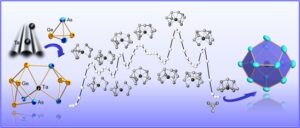
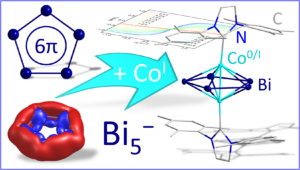
The diversity of cluster compositions and architectures largely affects the chemical and physical properties of materials based on them, which has stimulated research in this field worldwide—both regarding the synthesis of corresponding compounds and the theoretical work associated with those efforts.1 In particular, clusters that combine main group elements of the p-block with atoms from the d- or f-block metals have been a source of inspiration over the years and keep enjoying a lot of attention.2–4 In addition to fundamental aspects, such as the interactions between heavier elements and insights into the still only fragmentarily explored formation of multimetallic clusters (see figure, left),5–7 such species are intensely studied in regards of cluster-based bond activation,8 or as precursors for new intermetallic nanoarchitectures.9 The inclusion of open-shell d- or f-block metal atoms in such clusters can lead to substantial ring currents and aromatic behavior as a response to magnetic fields. Such features were recently discussed for [U@Bi12]3–,10 [Th@Bi12]4–,11 [{CpRu}3Bi6]–,12 and the Bi5– anion trapped for the first time in [{IMesCo}2Bi5] (see figure, right).13 For all these investigations, computational work constitutes an indispensable tool. The processes often proceed on timescales too short to be captured experimentally, occur under conditions that are challenging to access (for example, within a high-temperature furnace), or involve compounds that lack a suitable spectroscopic or chemical handle to monitor their transformation or properties in solution. Consequently, in this domain of inorganic chemistry and materials research, in vitro and in silico approaches are inherently intertwined in a fundamentally synergistic manner.
References:
[1] Zhang, J.; Bu, X.; Feng, P.; Wu, T. Acc. Chem. Res. 2020, 53, 2261.
[2] Wilson, R. J.; Lichtenberger, N.; Weinert, B.; Dehnen, S. Chem. Rev. 2019, 119, 8506.
[3] McGrady, J. E.; Weigend, F.; Dehnen, S. Chem. Soc. Rev. 2022, 51, 628.
[4] Pan, F.; Peerless, B.; Dehnen, S. Acc. Chem. Res. 2023, 56, 1018.
[5] Mitzinger, S.; Broeckaert, L.; Massa, W.; Weigend, F.; Dehnen, S. Nat. Commun. 2016, 7, 10480.
[6] Pan, F.; Wei, S.; Guggolz, L.; Eulenstein, A. R.; Tambornino, F.; Dehnen, S. J. Am. Chem. Soc. 2021, 143, 7176.
[7] Townrow, O. P. E.; Weller, A. S.; Goicoechea, J. M. Angew. Chem. Int. Ed. 2024, 63, e202316120.
[8] Townrow, O. P. E.; Chung, C.; Macgregor, S. A.; Weller, A. S.; Goicoechea, J. M. J. Am. Chem. Soc. 2020, 142, 18330.
[9] Bentlohner, M. M.; Waibel, M.; Zeller, P.; Sarkar, K.; Müller-Buschbaum, P.; Fattakhova-Rohlfing, D.; Fässler, T. F. Angew. Chem. Int. Ed. 2016, 55, 2441.
[10] Lichtenberger, N.; Wilson, R. J.; Eulenstein, A. R.; Massa, W.; Clérac, R.; Weigend, F.; Dehnen, S. J. Am. Chem. Soc. 2016, 138, 9033.
[11] Eulenstein, A. R.; Franzke, Y. J.; Lichtenberger, N.; Wilson, R. J.; Deubner, L.; Kraus, F.; Clérac, R.; Weigend, F.; Dehnen, S. Nat. Chem. 2021, 13, 149.
[12] Peerless, B.; Schmidt, A.; Franzke, Y. J.; Dehnen, S. Nat. Chem. 2023, 15, 347.
[13] Rienmüller, J., Peerless, B., Paul, S.; Bruder F.; Wernsdorfer, W.; Weigend. F.; Dehnen S. Nat. Chem. 2025, 17, 547.

Vikram Deshpande
University of Cambridge, United Kingdom
Capturing high-rate spatiotemporal deformation of materials in three dimensions (3D) remains a significant challenge with current X-ray imaging techniques. We present a methodology that combines advances in neural rendering techniques with volume correlation methods to accurately reconstruct complex, high-rate 3D spatiotemporal structural evolutions. The fidelity and versatility of the method, which requires no pre-training, are demonstrated for a diverse set of intricate 3D-printed micro-architected solids. Using laboratory-based X-ray tomography, we capture the 3D growth of a dynamic crush band on a timescale of less than 100 milliseconds. By broadening this idea to a stereo X-ray concept, we eliminate the need to rotate the image object, thereby extending the technique to significantly faster timescales. Our neural rendering framework opens new possibilities for studying numerous poorly understood dynamic processes, such as the runaway failure of batteries and the temporal evolution of 3D shock microstructures under impact loading, all using laboratory X-ray systems.
Pascal Friederich
Karlsruhe Institute of Technology (KIT), Germany
Machine learning can accelerate the screening, design, and discovery of new molecules and materials in multiple ways, e.g. by virtually predicting properties of molecules and materials, by extracting hidden relations from large amounts of simulated or experimental data, or even by interfacing machine learning algorithms for autonomous decision-making directly with automated high-throughput experiments. In this talk, I will focus on our research activities on materials property prediction.
[1,2] and inverse design of materials [3], materials foundation models [4], as well as self-explaining graph neural networks [5,6] to foster scientific understanding in chemistry and materials science. [1] Ruff et al., Digital Discovery 3, 594-601, 2024.[2] Reiser et al., Communications Materials 3, 93, 2022. [3] Ruple et al., arXiv:2502.03146, under review. [4] Mirza et al., ICLR AI4MAT Workshop, 2025. [5] Teufel et al., Explainable Artificial Intelligence 2023 1902, 338-360 [6] Sturm et al., Angewandte Chemie 2025.
Stefanie Gräfe
Friedrich Schiller University Jena, Germany
The excitation of collective electron dynamics inside the metallic nanoparticles induced by external light fields leads to strongly re-shaped electromagnetic nearfields with a complex spatial and temporal profile. The interaction of these modified and enhanced nearfields with systems located in close vicinity to the metallic nanoparticle is the origin of many astonishing physical and chemical phenomena, such as the formation of new quasiparticles, new mechanisms for chemical reactions or the ultra-high spatial resolution and selectivity in molecular detection. For the theoretical description of such plasmonic hybrid systems in external light fields, it is necessary to describe both the electromagnetic interaction and the more chemical effects equally. In this talk, I will introduce our recent results on the theoretical description of these systems, with particular emphasis on spectroscopic applications, e.g., in the context of tip-enhanced Raman scattering spectroscopy and/or plasmon-induced catalysis [1-5]. Our calculations show pronounced changes of the Raman spectrum under non-resonant and resonant conditions and support the possibility of sub-nanometer spatial resolution.
Mike Hagan
Brandeis University, USA
Active matter is composed of particles that generate forces or motion, which leads to spectacular emergent dynamics. In principle, active matter could form the basis for a new class of materials with lifelike properties of biological organisms. Yet, active materials exhibit diverse dynamical states, most of which have chaotic dynamics that do not produce work or other useful functions. Thus, a robust control strategy is needed to drive active materials into an emergent state that corresponds to a desirable function. However, designing control protocols requires accurate dynamical models, which are not available for most active matter systems. Developing quantitative models using traditional statistical physics approaches is challenging because active materials lack the scale separation characteristic of equilibrium systems.
In this presentation, I will discuss efforts to combine machine learning, other data-driven techniques, and physics-based models with control theory to address this challenge in the context of a widely-used active material, microtubule-based active nematics. Recent advances in optogenetic motors have enabled constructing the light-activated active nematics, in which the activity can be spatiotemporally controlled by shining light on the sample. The challenge is to determine the spatiotemporal light sequence required to drive the system into a desired behavior.
I will describe two complementary approaches to computationally determine an optimal light sequence. In the first, we have adapted a method to discover optimal physics-based continuum models directly from spatiotemporal data, using sparse regression. We have identified several approaches to mitigate measurement errors in the data. We find that the method can reveal the relative contributions of different physical mechanisms, and quantitatively estimates key experimental parameters. Then, we have developed a framework to combine the optimal physics-based model with optimal control theory to solve for the spatiotemporal activity profile that drives the system into a desired state. We demonstrate that active materials can be driven into arbitrary behaviors, including those which do not correspond to dynamical attractors and thus cannot be accessed without control.
Since no model is perfectly accurate for a specific system, in the second approach we develop a deep reinforcement learning (DRL) based controller to enable model-free control of active materials. The controller discovers and implements spatiotemporal sequences of activity to drive a 2D active nematic system toward a prescribed dynamical steady-state. This framework does not require a detailed physics model, making it ideal for complex active materials that lack quantitative theoretical descriptions. Furthermore, the approach is extremely robust to noise and experimental measurement error. We compare the performance of the physics-based and DRL-based controllers for active nematics.
This work was supported by DE-SC0022291. Preliminary work was supported by NSF DMR-1855914 and DMR-2011846. Computing resources were provided by XSEDE TG-MCB090163 and the Brandeis HPCC (DMR-MRSEC 2011846 and OAC-1920147).
Steven G. Johnson
Massachusetts Institute of Technology (MIT), USA
Inverse design is the technique of using large-scale optimization (over thousands or even millions of parameters) to allow the computer to “discover” the best arrangement of materials for a given application, often leading to non-intuitive freeform geometries. The most straightforward way to perform inverse design is to apply optimization to the result of an accurate physical model that directly simulates the desired effect: a “numerical experiment” mirroring (one hopes) the real-world performance. However, we argue that this is often too restrictive: sometimes, vastly better performance is attainable by allowing the computer to exploit “unphysical” models—inaccurate simulations, unphysical materials, and regimes inaccessible to realistic experiments—as long the eventual result (after optimization convergence) returns to the physical realm. We illustrate these ideas with several examples from photonics topology optimization, including incoherent emission, laser optimization, and the design of optical filters.
Mario Krenn
Max Planck Institute for the Science of Light (MPL), transitioning to Tübingen, Germany
Artificial intelligence (AI) is a potentially disruptive tool for physics and science in general. One crucial question is how this technology can contribute at a conceptual level to help acquire new scientific understanding or inspire new surprising ideas. I will talk about how AI can be used as an artificial muse in physics [1], which can design new physics experiments [2,3] or suggest surprising and unconventional ideas and techniques for human scientist [4]. In the end, i will talk about AI-Mandel [5], a closed-loop discovery system that automatically generates new ideas in quantum physics and can execute and verify them with intelligent domain tools, with ideas being at the level of publishable works in quantum physics.
[1] Krenn, Pollice, Guo, Aldeghi, Cervera-Lierta, Friederich, Gomes, Häse, Jinich, Nigam, Yao, Aspuru-Guzik, On scientific understanding with artificial intelligence. Nature Reviews Physics 4, 761–769 (2022).
[2] Ruiz-Gonzalez, Arlt, et al., Digital Discovery of 100 diverse Quantum Experiments with PyTheus, Quantum 7, 1204 (2023).
[3] Krenn, Drori, Adhikari, Digital Discovery of Interferometric Gravitational Wave Detectors, PRX 15, 021012 (2025)
[4] Gu, Krenn, Interesting Scientific Idea Generation Using Knowledge Graphs and LLMs: Evaluations with 100 Research Group Leaders.
arXiv:2405.17044 (2024
[5] Arlt, Gu, Krenn, Towards autonomous quantum physics research using LLM agents with access to intelligent tools. arXiv:2511.11752 (2025).
Martin Lenz
University of Paris-Saclay (LPTMS), France
The self-assembly of complex structures from engineered subunits is a major goal of nanotechnology, but controlling their size becomes increasingly difficult in larger assemblies. Existing strategies present significant challenges, among which the use of multiple subunit types or the precise control of their shape and mechanics. Here we introduce an alternative approach based on identical subunits whose interactions promote crystals, but also favor crystalline defects. We theoretically show that topological restrictions on the scope of these defects in large assemblies imply that the assembly size is controlled by the magnitude of the defect-inducing interaction. Using DNA origami, we experimentally demonstrate both size and shape control in two-dimensional disk- and fiber-like assemblies. Our basic concept of defect engineering could be generalized well beyond these simple examples, and thus provide a broadly applicable scheme to control self-assembly.
Antonio Calà Lesina
Leibniz University Hannover, Germany
Inverse design methods based on topology optimization can uncover nanophotonic structures in 3D with free-form shapes beyond human intuition, and optical functionalities not
obtainable with conventional design methods. This talk highlights the recent achievements of my team on large-scale topology optimization for metaphotonics and integrated optics. Some of the topics include the inverse design of nanostructures made of arbitrary dispersive optical materials, the broadband optimization of absorption in metallic and dielectric nanostructures, anapole effects in plasmonic meta-atoms for transparent metasurfaces and metamaterials, and nanoantennas with desired multipolar response for scattering engineering.
Carl Modes
Max Planck Institute of Molecular Cell Biology and Genetics (MPI-CBG), Dresden, Germany
Understanding how epithelial sheets of cells robustly and reliably adopt complex shapes during animal development remains a key open problem of developmental biology and tissue mechanics. Classically, cortical contractility of the apical surface of these cells generating local bending moments in an effectively fluid tissue has been the go-to theoretical picture for such problems. However, many morphogenetic events are not well explained under this framework. We hypothesize that collective, in-plane active cell behaviours could instead generate effective spontaneous strains in a solid tissue and in so doing drive stable shape outcomes. We explore these ideas and their consequences in a series of lower dimensional and/or simplified arenas, from a quasi-1d spontaneous strain buckling instability model of the Drosophila cephalic furrow, to how actively driven neighbour rearrangements in vertex models can give rise both to entropic forces in the tissue and locally establish coarse-grained spontaneous strains at steady state. We then turn to a full-blown 3D problem where, together with experimental collaborators, we show that active, in-plane cellular behaviours create the spontaneous strains that ultimately shape the Drosophila wing disc pouch during the dramatic morphogenetic event known as eversion. Taken together, these findings establish active, in-plane, solid shape programming as a potentially general mechanism for animal tissue morphogenesis.
Christoph Scheurer
Fritz Haber Institute of the Max Planck Society, Germany
More performant and durable materials are urgently needed to further drive the transition to a sustainable energy system. Unfortunately, accelerated materials discovery is in this field presently still more claim than practical reality. Computational screening approaches hinge on efficient descriptors that only reflect nominal materials properties of the crystalline bulk, simple bulk-truncated surfaces or idealized lattice-matching interfaces. They can thus not account for the substantial, complex and continuous structural, compositional and morphological transitions at the working surfaces or interfaces of functional materials in catalysts, electrolyzers or batteries. Accelerated experimental discovery in turn still suffers from severe throughput limitations, as easily automatable human steps are rarely limiting the overall workflows.
In my talk I will illustrate how the convergence of AI-based experiment planning and control with automation and robotization is currently starting to change this picture. Examples will not only cover straightforward loop-style self-driving labs for direct exploration of design spaces, but also approaches geared toward mechanistic understanding like automated reaction mechanism generation or autonomous electron microscopy. Methodological frontiers concern significant or varying noise levels (e.g. in case of multi-fidelity measurements), the design of larger numbers of data points (to meet batch-type operation in increasingly parallelized workflows), or agility to either autonomously adapt the shape and dimensions of the search spaces across loops or react to corresponding changes imposed by human scientists.
Yair Shokef
Tel Aviv University, Israel
Extraordinary responses of mechanical metamaterials often stem from incompatibility of their elementary building blocks. Relying on analogies to magnetic interactions, we describe the deformation fields in complex mechanical metamaterials by discrete spin states. We show how spin frustration relates to mechanical incompatibility, and we use this to design, analyze, and realize complex mechanical metamaterials with novel functionalities; We employ combinatorial strategies to construct metamaterials that can deform to arbitrary numbers of pre-defined textures. We use topological defects to steer deformations and stresses towards desired parts of the system. We construct topologically non-trivial knots and links in the defect pattern or in the deformation field. We use the degenerate and disordered manifold of mechanically stable states to detect the sequence of operations that a material underwent.
Erika Tsingos
Utrecht University, The Netherlands
Animal development is fascinatingly complex. At the subcellular level, an intricate machinery of thousands of molecular components churns. It ensures that the right genes are expressed at the right time and place, and shapes cells from the inside to give rise to specialized structures such as nutrient-absorbing protrusions. At the cell level, relatively few behaviours emerge such as cell division, migration, and cell-cell adhesion. Acting as a collective, cells give shape to organs and maintain them lifelong by constantly repairing wear and tear. These scales – subcellular, cellular, and organ-scale – are not isolated, but cross-regulate by feedback interactions. Computational models are perfectly poised to disentangle such complex relationships by isolating the contributions of each factor, both testing and generating new hypotheses. In my talk, I will give an overview of the field of cell-based computational models and highlight examples of new model developments in my research group.
Martin Wegener
Karlsruhe Institute of Technology (KIT), Germany
Metamaterials are rationally designed composites allowing for effective-medium properties that go qualitatively or quantitatively beyond (‘meta’) those of the bulk ingredients [1]. Many metamaterials can and have been made by means of 3D printing [2], and can in turn by viewed as ‘meta-inks’ for 3D printing. In many instances [1,3], the properties of a composite made of ingredient materials A and B are not in between those of A and B. In interesting cases, the properties lye outside the interval defined by A and B. Sometimes, the properties can even be negative with respect to those of A and B [1]. Sometimes, the properties are even unbounded [1].
Metamaterials cover the entire breadth of solid-state-physics, ranging from electromagnetic and optical properties, to static and dynamic elastic, acoustic, as well as charge-, mass-, and energy-transport properties.
Designing a metamaterial poses an inverse problem: One targets certain effective properties and searches for a manufacturable 3D microstructure that that exhibits these properties. For us, this process has always involved human intelligence.
In this talk, I present selected examples of our past work [1] and of our more recent work [3]. The latter focuses on nonlocal wave and diffusion properties, engineered by beyond-nearest-neighbor inter-actions in periodic lattices (crystals) [3].
[1] “3D Metamaterials”, M. Kadic, G.W. Milton, M. van Hecke, and M. Wegener, Nature Rev. Phys. 1, 198 (2019)
[2] “The physics of 3D printing with light”, P. Somers, A. Münchinger, S. Maruo, C. Moser, X. Xu, and M. Wegener, Nature Rev. Phys. 6, 99 (2024)
[3] “Nonlocal metamaterials and metasurfaces”, Y. Chen, R. Fleury, P. Seppecher, G. Hu, and M. Wegener, Nature Rev. Phys. 7, 299 (2025)
Tanja Weil
Max Planck Institute for Polymer Research, Mainz, Germany
We present synthetic supramolecular systems that form and operate within living environments to control cellular function. Our in-cell synthesis strategy uses endogenous redox, enzymatic, and metabolic inputs or light to trigger supramolecular assembly and catalytic activity, enabling state-dependent modulation of mitochondrial metabolism and immune function. In parallel, we design artificial cells with chemically encoded sensing and actuation
capabilities that exchange metabolites with natural cells, forming hybrid systems with bidirectional communication. These approaches establish a materials-based route to influence cellular fate without genetic manipulation and provide design principles for autonomous therapeutic systems and synthetic organelles.